Flooded Basement After Heavy Rain? Summer Storm Cleanup for Ohio Valley Homeowners
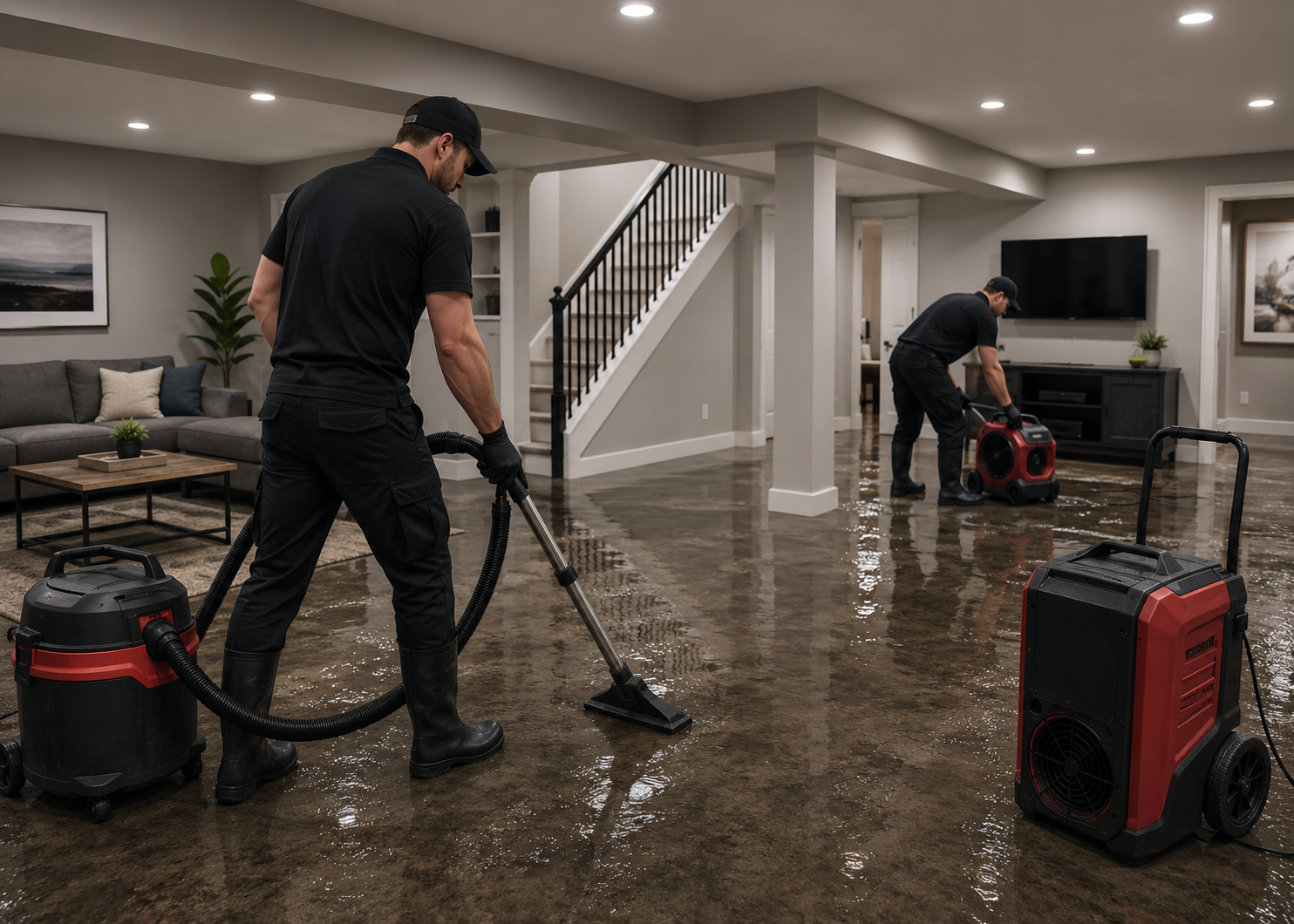
Heavy summer storms and clay-heavy soil make basement flooding the Ohio Valley's top warm-season emergency. Learn the first steps to take, what cleanup costs, how to prevent it, and how Americon Restoration responds 24/7 across Youngstown, Austintown, Boardman, Canfield, and Warren.
Summer storms in the Ohio Valley arrive fast and drop a lot of water in a short window. In late May 2026, forecasters warned that flash flooding threatened more than 20 million people across the Mid-Atlantic and Ohio Valley, with localized rain totals of 1 to 2 inches or more (FOX Weather). When that much rain hits our clay-heavy soil, basements are the first place it shows up.
If you're standing in a flooded basement right now, here's what matters most: stop using electrical devices in the water, and call Americon Restoration at 330-238-3927. We respond 24/7 across Youngstown, Austintown, Boardman, Canfield, Warren, and the surrounding communities. The rest of this guide explains exactly what to do, what it costs, and how to keep it from happening again.
Why basements flood so often in the Ohio Valley
Our region is built for water trouble. Youngstown and the surrounding Mahoning Valley sit on clay-heavy glacial till that drains slowly and holds water for days after a storm passes. That keeps hydrostatic pressure pressing against your foundation walls long after the rain stops (Roto-Rooter, Youngstown).
In summer, the most common triggers are:
- Heavy rain overwhelming storm drains, which pushes water back through floor drains and sump pits.
- Sump pump failure during the exact storm you need it most — often from a power outage, an undersized pump, or a clogged discharge line. In a severe storm, a basement can flood in a matter of minutes once the pump quits (Zeek Plumbing).
- Foundation cracks and window wells that let surface water seep in.
- Sewer line backups, made worse by tree roots invading aging clay pipes in our shifting soil.
The Ohio Valley has already seen repeated severe-weather and flash-flooding events this year, with NWS storm surveys documenting heavy rain and flooded roadways across northern Ohio (National Weather Service, Cleveland).
What to do the moment your basement floods
Quick, correct action limits the damage and your repair bill. If water is rising quickly or there's any risk of electrical shock, get out and call for help first.
- Stay out of standing water near outlets or appliances. If you can safely reach the breaker, cut power to the basement before entering (Ohio State Waterproofing).
- Find and stop the source if you can — a failed sump pump, a backed-up floor drain, or a foundation leak.
- Document everything. Take photos and video of the water line, damaged belongings, and affected areas before you move anything. This protects your insurance claim.
- Move valuables and electronics to a dry, higher level.
- Don't DIY the full cleanup. Wet drywall, insulation, and subflooring trap moisture you can't see, and improper drying is the #1 cause of post-flood mold. Let a certified crew handle extraction and structural drying.
- Call Americon Restoration. The sooner we're on site, the more we can save.
How fast does water damage become mold?
Mold can begin growing within 24 to 48 hours of water exposure. That's why speed matters so much. Standing water, soaked drywall, and damp framing create exactly the conditions mold needs. Professional water extraction followed by structural drying and moisture monitoring is the only reliable way to prevent a flooded basement from becoming a remediation project. (Learn more on our mold remediation overview.)
What flooded basement cleanup costs in the Ohio Valley
Every loss is different, but here's a realistic range to help you plan. These figures depend on how much water came in, how long it sat, and how far it spread.
- Emergency water extraction — $400 – $1,500. Driven by volume of standing water and square footage.
- Structural drying & dehumidification — $1,000 – $3,500. Driven by number of rooms, materials affected, and days to dry.
- Drywall / flooring repair — $1,500 – $6,000+. Driven by the extent of saturated materials.
- Mold remediation (if delayed) — $1,500 – $6,000. A reason fast response saves money.
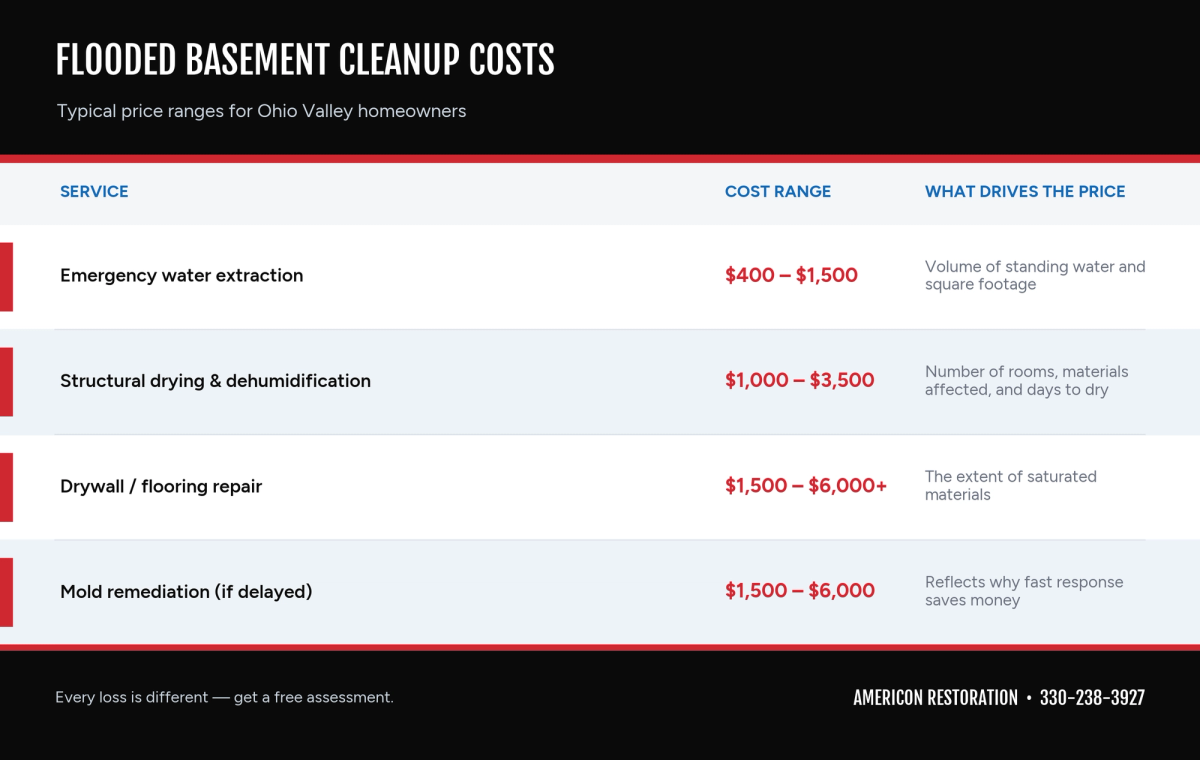
Ranges are estimates for planning only. Americon provides a free, detailed assessment and helps you document the loss for your insurer.
Whether a flood is covered depends on the cause: water that backs up from an overwhelmed drain or a failed sump pump is often covered under a sump-pump or water-backup endorsement, while surface flooding from rising water usually requires separate flood insurance. We'll help you document the loss and work through the claims process from the first photo to the final repair.
How to prevent basement flooding this summer
A few steps before the next downpour can save you thousands:
- Test your sump pump by pouring water into the pit, and confirm the float switch moves freely.
- Add a battery or water-powered backup pump — storms and power outages arrive together, and your primary pump is useless without power.
- Keep the discharge line clear and make sure it exits well away from the foundation.
- Clean your gutters and extend downspouts at least 6 to 10 feet from the house.
- Grade the soil so it slopes away from your foundation.
- Seal foundation cracks and window-well leaks before the next heavy rain.
Why Ohio Valley homeowners trust Americon
For over a century, Americon has been a family-owned company restoring homes and businesses across the Ohio Valley. Founded by our grandfather in 1912, we've passed down a legacy of craftsmanship and care through three generations. We treat every home like our own — with fast 24/7 response and white-glove service.
When your basement floods, you need a crew that's already nearby and ready to roll, day or night.
Frequently asked questions
What's the first thing to do when my basement floods?
Stay out of standing water near electrical sources and cut power to the basement if you can do so safely. Then document the damage with photos and call a 24/7 restoration team before water spreads further.
Does homeowners insurance cover basement flooding?
It depends on the source. Water backing up through drains or from a failed sump pump is often covered with a water-backup or sump-pump endorsement, while surface flooding from rising groundwater typically requires separate flood insurance. We help document your loss to support the claim.
How long does basement water damage take to dry?
Professional structural drying usually takes 3 to 5 days, depending on how much material was saturated and how quickly extraction began.
Can I clean up a flooded basement myself?
You can remove standing water with a wet/dry vac or portable pump if it's safe, but hidden moisture in drywall, insulation, and subflooring needs professional drying equipment and monitoring to prevent mold. DIY cleanup is the most common cause of secondary damage.
Don't wait — water damage spreads by the minute
If heavy summer rain has flooded your Youngstown, Austintown, Boardman, Canfield, or Warren basement, Americon Restoration is ready 24/7.
Call 330-238-3927 or 1-833-HERE-4-US now.